
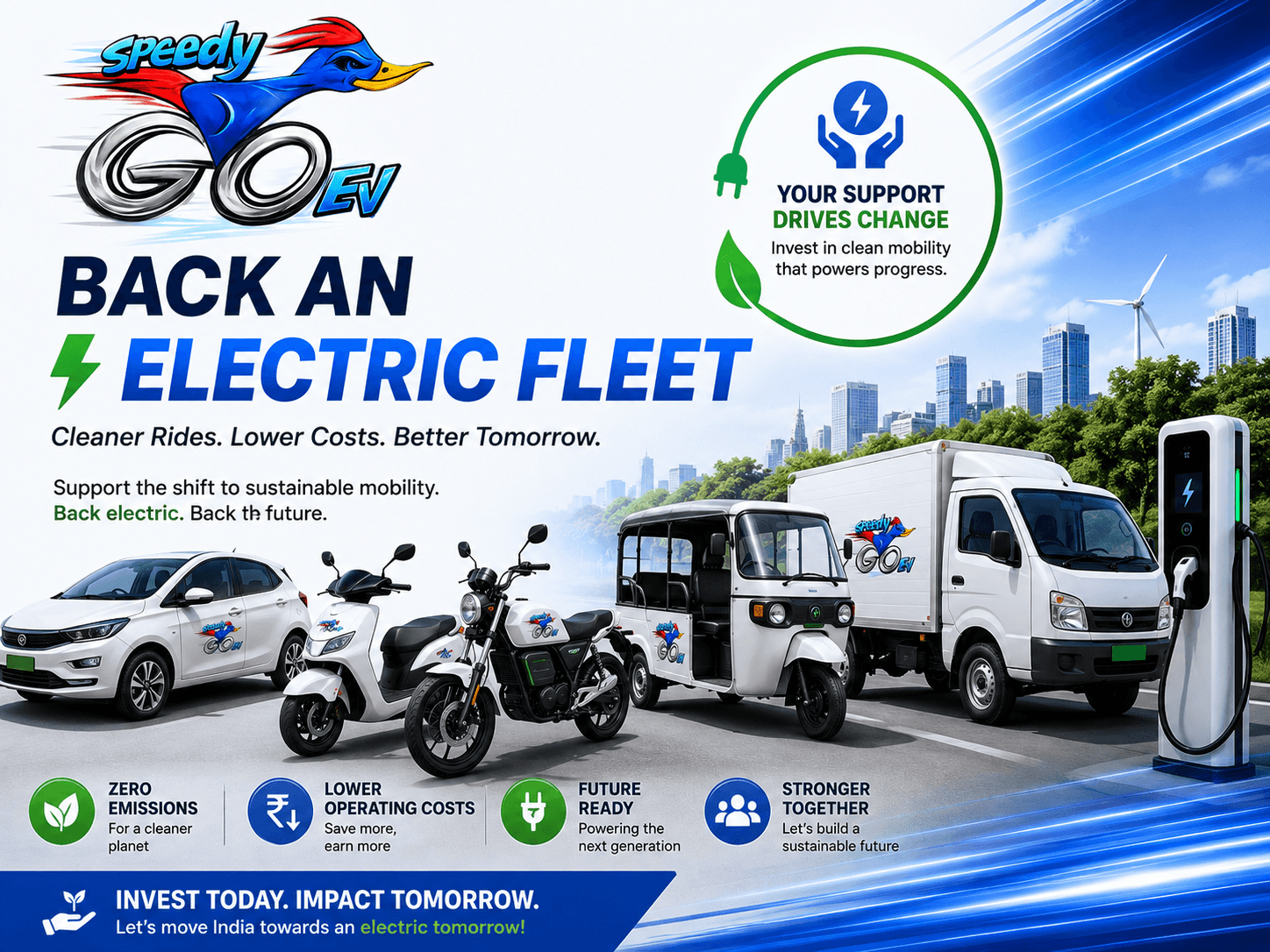
Back an
electric fleet
Three services on one company-owned electric fleet.
Four things are true at once
And they point the same way. This is public context, not our own performance.
Two wheels carry the country
Most Indian urban trips happen on two wheels, and short trips are what cab platforms serve worst. That gap is the market.
The switch is already underway
A fleet that is electric from day one does not have to be rebuilt in five years, once the rules and the economics have moved.
Tier-two cities are open
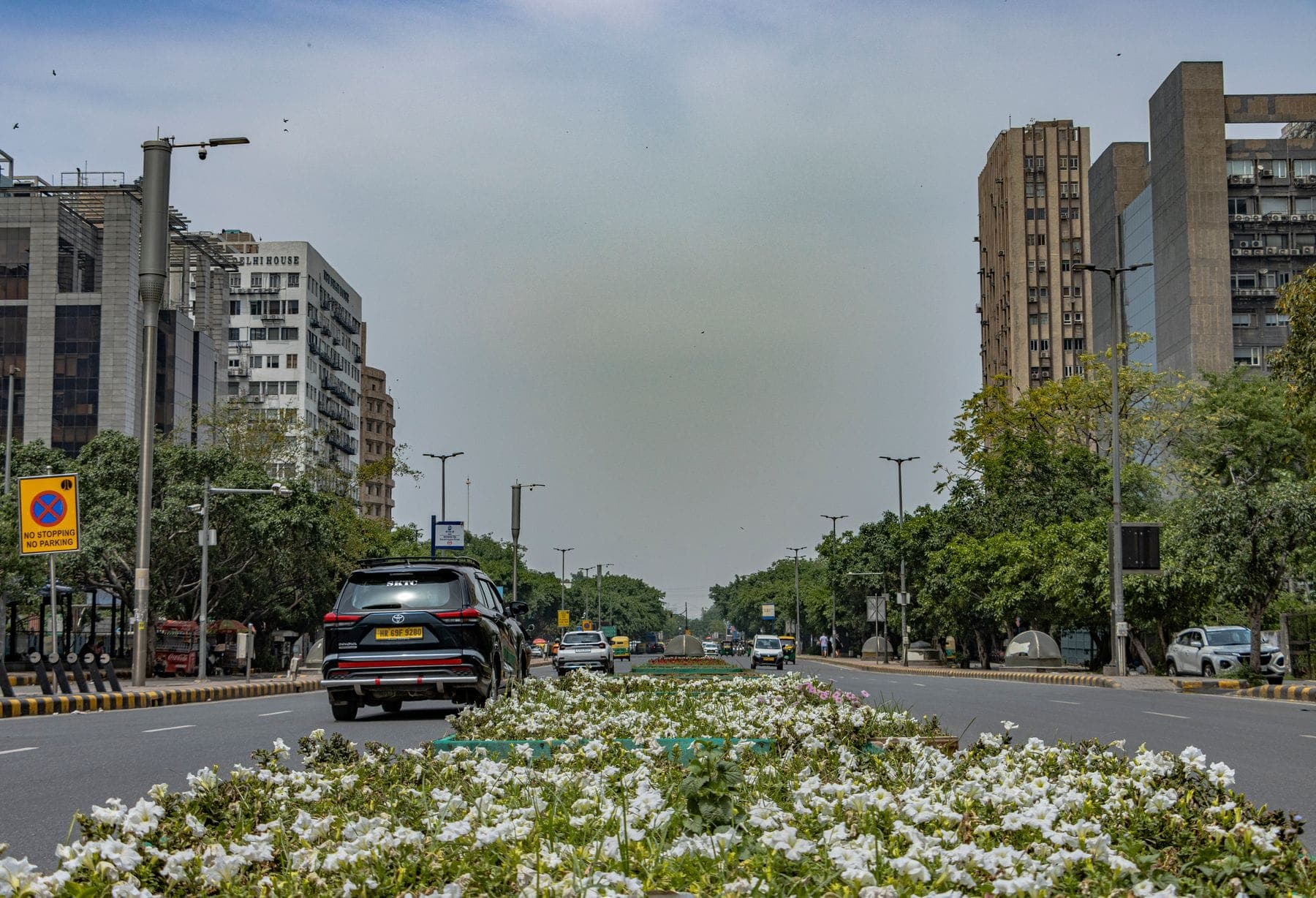
The large platforms crowd the metros. Smaller cities have the same need, far fewer options, and cost a fraction of a metro to win.
Riders want work, not a loan
There is no shortage of people willing to drive. What stops them is owning a vehicle, and rental removes that.
The numbers behind it

- 70%+
of India's motorised trips happen on two wheels
Industry estimates, Indian urban mobility
- Tier 2–3
cities where large platforms are thinnest on the ground
Where Go Speedy operates
- 1/5th
running cost per km of an electric two-wheeler versus petrol
Comparative energy cost, electricity versus fuel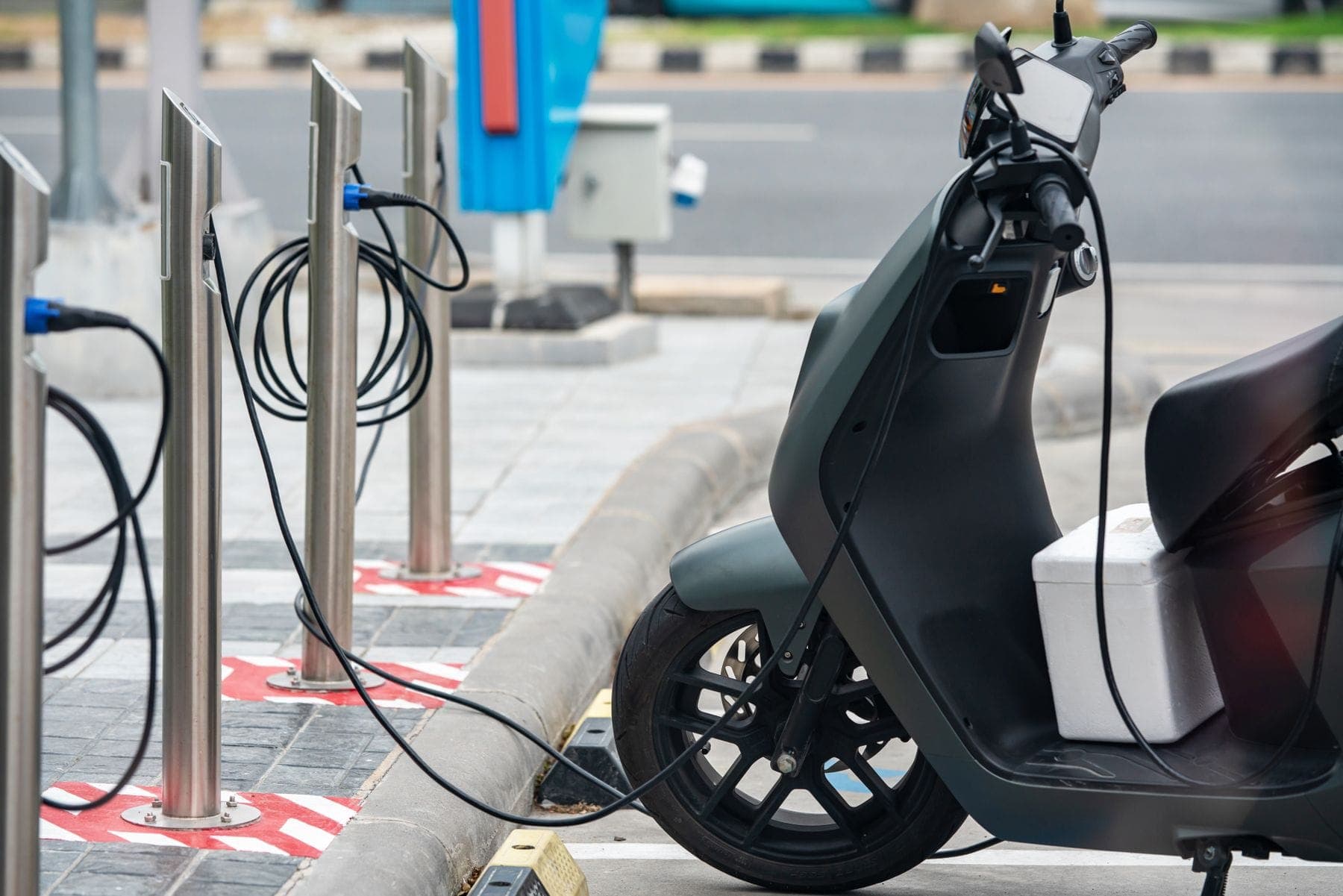
- Industry estimates, Indian urban mobility
- Where Go Speedy operates
- Comparative energy cost, electricity versus fuel
What is hard to copy
Anyone can build a booking app. These five took capital, time and a team on the ground.
We own the vehicles
Most platforms own nothing and are one better offer away from losing their supply. Our fleet is a hard asset we control.
Rental is the supply engine
Renting to someone with no vehicle creates a captain rather than poaching one. Cheaper supply, and it stays.
Three jobs, one cost base
Rides, parcels and rental share the same vehicles, captains and operations team. Utilisation rises; fixed cost does not.
City by city, not all at once
We enter where competition is thin, build density, then move outward. Growth is measured one city at a time.
Operations run in-house
Allocation, KYC and service-area mapping are done by our own team. Slower to scale, far fewer disputes and bad debts.
What the money buys
Asset-heavy by choice. Capital becomes vehicles and hubs, and those become captains earning.
- Vehicles for the fleet
- Charging and service hubs
- New city launches
- Product and operations systems
How an investment can be structured
- Equity in Go Speedy EV Private Limited
- Asset or debt financing against the fleet
- Partnering on a city launch
- Charging and hub infrastructure
- Strategic partnership in mobility, energy or logistics
From first email to signed documents
Five steps. The city visit is the one that decides most conversations.
Reach out
An email or a call, with a line on what you invest in. It reaches the founders, not a mailbox.

A first call
The model, the fleet, the cities we run in and what we are raising for. You ask whatever you want.
Numbers, privately
Fleet utilisation, city-level performance and the plan, shared with you under NDA rather than published.

See it running
Come to a city. Meet the operations team, walk a hub and talk to captains without us standing over them.

Diligence and documents
Your process, your advisors. Nothing is agreed anywhere except in signed documents.
Read it for yourself
The deck, the numbers and the company, as PDFs. Open one in the browser or save it for later.
Start a conversation
Detailed financials are shared privately under NDA and are not published here. Write or call, and it reaches the founders.